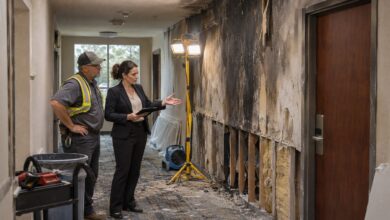
There is no useful national hotel property insurance cost that substitutes for a quote on your building. A $5 million masonry hotel and a $5 million coastal hotel can present different conditions to the same carrier. Premium depends on the insured property, valuation, location, claims, construction, overall coverage, and deductible structure. Build a comparison on the same statement of values and the same sample loss before deciding which quote costs less.
Give every carrier the same property information
Record building age, square footage, construction class as confirmed by a professional, roof history, fire protection, and occupancy by wing. Include detached laundry, conference space, and leased equipment as applicable. A property renovated in phases can have different roof dates, electrical systems, or protection features. Use the actual records. Tell the broker if part of the hotel will operate while work takes place.
Request an updated rebuilding estimate and itemize furniture, fixtures, equipment, and stock. Ask what valuation the insurer actually offers and how it treats debris removal, mechanical systems, and code upgrades. A quote based on actual cash value can differ from a proposal with a replacement cost form, even if both show a similar headline amount. If existing coverage uses outdated limits, ask both carriers to price the corrected value before comparing premiums.
Compare the price drivers one at a time
Ask which causes of loss the property form covers and whether any deductible applies specifically to wind, hail, water, or another event. Review flood and equipment breakdown separately where relevant. Give both brokers the same underwriting information, loss history, repair documentation, and protection details. Ask whether a quote depends on an inspection, repair, or written improvement commitment. A price that depends on a roof replacement needs to be compared with the cost and timing of that work.
Ask for different deductible choices on the same coverage. Try to isolate one change per quote. If the insurer changes the deductible and business income amount at the same time, ask for an itemization that shows what each change costs. Request the full-term premium along with applicable fees, taxes, installment charges, and any separately purchased layers. Record the currency and policy term to avoid mixing costs for different time periods.
Calculate the cash exposure under a percentage deductible
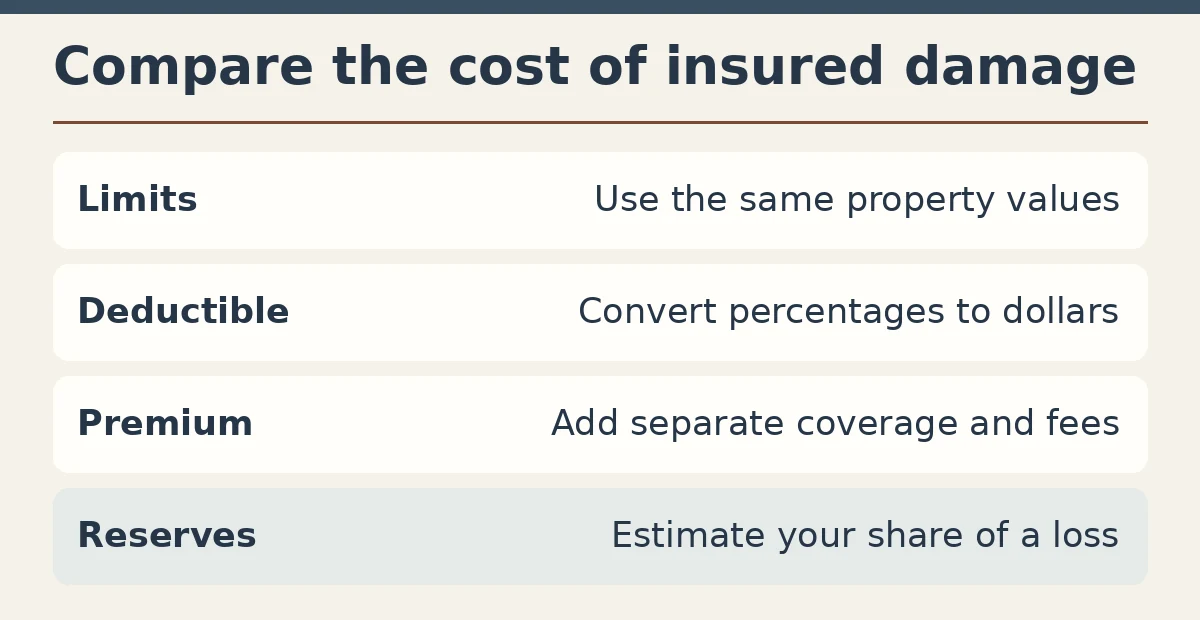
A percentage deductible is applied to the base stated in the form. For example, if it applies to a $6 million insured value at 2%, the deductible would be $120,000. Do not assume the percentage applies only to the insurer’s repair estimate. Ask the carrier to identify the base and explain whether the rule applies to a building, multiple locations, or another amount. Check when the deductible is triggered and how the written form treats different events.
A hypothetical quote costing $29,000 with a $25,000 deductible and another costing $23,000 with a $75,000 deductible differ by $6,000 in annual premium and $50,000 in retained loss under those assumed terms. A comparison after one qualifying loss makes the higher deductible visible. The figures illustrate the method and do not represent market prices or offers. Check other eligible coverage differences and reserve capacity before deciding.
Separate property and business income when comparing totals
Ask for a quote with the same building and contents protection and an itemized amount for business income and extra expense. Give each carrier the same operating history, repair period, and expected partial reopening. Explain month-to-month seasonality and revenue from parking, meetings, or food where relevant. Ask which periods and estimates it uses and how it treats savings in operating costs when part of the hotel is closed.
To choose an amount to compare, look at the highest exposure month and an off-season month. A single day of room revenue may not reflect the revenue lost over an extended restoration. Make a reserve estimate for interruption costs and other uninsured or delayed amounts. If a lender requires evidence of certain protection, ask it to review the actual quote or binder and confirm what documentation is acceptable.
Check whether a lower premium changes essentials
Compare the occupancy, replacement cost values, deductibles, perils, special sublimits, renovation terms, and forms in one place. Ask what a broker changed when a second quote arrives much cheaper. Determine what requires an endorsement, separate carrier, or new documentation. A proposal that requires the hotel to keep a specific protective system operating can create practical obligations. Discuss the conditions with the people who maintain the building before binding coverage.
If a policy uses several insurers or layers, write down each carrier, limit, attachment point, and reporting responsibility. Check whether all pieces begin on the same date. Ask how the program responds if one participating carrier’s form differs. Compare the total in writing with one scenario for a small loss and one for major restoration. Include applicable cash outlay for claims and the timing of premium payments.
Ask what evidence could improve the next renewal
Save dated records of roof work, plumbing updates, sprinkler and alarm inspections, and completed repairs associated with prior claims. Ask each carrier which improvements matter to its own underwriting and whether it needs an inspection. A recommendation is useful when it can be matched to a timeline and a proposal. Record what an insurer expects you to deliver and confirm whether it is a condition or a suggestion.
At renewal, separate changes in insured values from changes in price for the same risks. If the guaranteed time to accept an offer is limited, find out when the underwriting terms become final. Review any installment or cancellation quote separately from the premium at the next full term. Keep prior declarations with the new cost comparison so you can see which year’s inputs and forms created each price.
Read the issued policy and first invoice together
Verify the policy names, locations, limits, terms, deductibles, and forms before comparing them with the invoice. If a form in the final policy differs from the form quoted, get clarification in writing. Ask how to record a future change in renovation status, occupancy, or equipment. Keep copies of the accepted proposal, broker correspondence, payment records, and date of any correction.
The most useful figure comes from a hotel property insurance quote you can actually purchase under comparable terms. Connect the annual amount to the property and loss scenarios you gave the broker. Then compare how much of the next eligible loss the hotel could be responsible for and when that cash would be needed.
Compare costs for two hotels under the same ownership
Take a hypothetical owner with an 80-room roadside hotel and a smaller downtown property. Gather the values for each insured structure, contents, and excluded property. Ask whether each address has a separate deductible and whether a combined program uses a shared limit, scheduled limits, or specific provisions by location. Give all carriers the same dates and the same list of rooms or sections temporarily closed.
If one insurer provides one combined premium, get its estimated costs or impact of a future change in each location. Ask how adding a small detached facility or raising an income limit would change the bill. Check what happens if a single event affects multiple locations. Put a model of the assumed payout sequence, retained costs, and timing beside each price. A pooled limit can be useful to compare once you know the requirements and amounts available elsewhere in the program.
Run separate budgets for physical damage and time to reopen
Suppose an illustrative repair estimate totals $450,000 but requires a separate period to restore bookings after the work is finished. Check which income or extra expense terms a proposed program offers and what its limits assume. Estimate the rooms that remain usable, the necessary cover to finish work, and any cash needed until payments arrive. Compare the annual price for two durations under the same physical damage form, where the carrier provides that option.
Ask your broker to distinguish the current renewal proposal from a possible inspection requirement. Put the cost of recommended repairs in a separate column and ask which items must be complete for the policy to issue. If there is a condition about a protective system, have the property manager confirm who can comply. Save the service contract and installation records. These details help make a consistent insurance cost comparison at the next review.
Look for more than one way to fund a higher deductible
Provide hotel finance with deductible examples from the property and income forms. Set up a forecast with the existing deductible, a higher assumed deductible, and the premium difference. Ask which reserves could be available and whether a lender limits how reserve cash can be spent. A saving in annual premium can be offset by other obligations that only become visible after a loss or inspection. Check how often smaller losses might need to be funded entirely by the operator.
If an insurer offers lower premium through an increased retention, identify what triggers it and how often it can apply. Put the proposed policy date beside your expected seasonal cash-flow high and low points. Ask what would happen if more than one covered event occurred in the same year. The goal is a written choice reasonable for both a typical term and a year in which the hotel needs repairs.
Ask how the insurer prices work already completed
After a roof, boiler, or water system repair, give your broker the invoice, installation date, and affected area. Ask exactly which condition the work changes in the new proposal. If a broader renovation changed the property’s expected rebuilding cost, request the new limits first and then compare pricing. Avoid assuming that a lower deductible is included simply because the underwriter acknowledged the repair. The issued form should show the actual deductible or applicable provision.
Get the broker to price the same insured building in two ways if more than one form is available. Ask for the expected cash to retain after one modest qualifying loss and a second, larger loss. Compare the written amount for each event. Then price the improvements, insurance, and retained loss as separate obligations for the year. The total helps a property manager explain how a maintenance choice and an insurance purchase interact.
Check price sensitivity without changing the insurable value
Ask how the premium changes when the business selects a different deductible on the same rebuild estimate and keeps the same business income limit. Set up one case for a year without a paid claim and another with a qualifying claim that exceeds both deductibles. In each case include any relevant premiums or fees and identify the amount the hotel would pay. Keep the case illustrative until the broker confirms the written terms.
If the lower-price insurer excludes a type of loss that concerns the owner, ask what separate coverage costs if it is available. Compare remaining cash obligations and what requirements the hotel has to maintain. Keep both fees and condition-related costs visible. The comparison should explain which options are fundable when the hotel has fewer room sales or needs emergency repairs.
Connect this comparison to the rest of the hotel
Review the real estate and income terms before treating a premium change as savings. Keep specialty and liability costs in the program budget so the owner sees the full cost of operating with the selected protection.
For related decisions, use the hotel property valuation and coverage guide, the hotel business insurance quote worksheet, and the hotel liability insurance comparison.
Sources consulted
Insurance Information Institute — Understanding commercial package policies