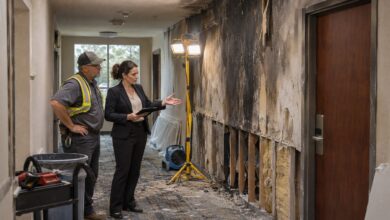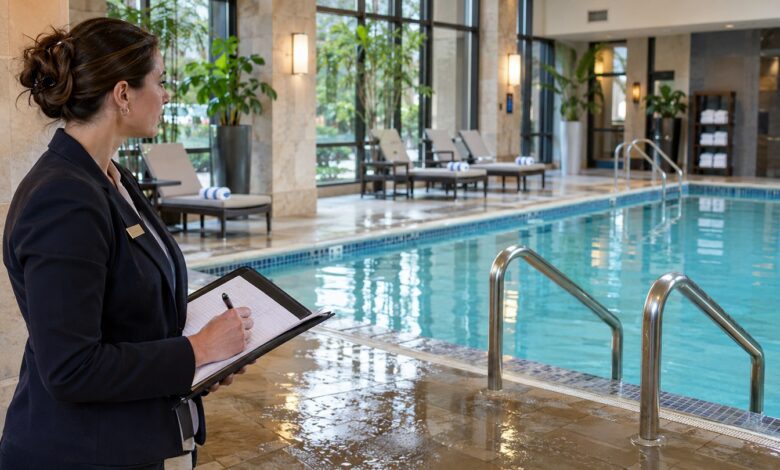
A hotel learns how good its pool incident procedures are when a guest trips on the deck and the manager on duty has only fragments of the story. The front desk knows when staff got the call. A contractor knows when the surface was inspected. A camera file may show the walkway while missing the point of the fall. Hotel liability insurance is one part of preparation for third-party claims. The other part is an operating file that describes what staff observed, what they did and which company was responsible for the area. Build that file before the renewal conversation forces the issue.
Define the coverage questions around the actual amenity
Describe the operation to the broker by location and activity. An indoor pool, spa, slide, seasonal outdoor deck, outsourced lifeguard or class can introduce different facts. Record hours, whether the area serves guests or outside visitors, who maintains the facility, and which entity operates it. If the resort adds a cabana program or rents the space for events, have operations report that change before the activities start. Give the broker an accurate exposure description so any eligibility, scheduling, exclusion or endorsement issues can be addressed in the proposal.
Review the commercial general liability policy, umbrella or excess policy, and any relevant endorsements together. Ask the broker how those contracts address bodily injury claims arising from the specific facility and whether conditions or exclusions apply. If an operator, owner and maintenance company share responsibilities, identify their exact legal names. Request a review of insurance and indemnity provisions in the vendor contract with qualified advisers. A certificate can help document insurance information; verify any required additional insured status or other contractual terms from relevant policy documentation. The applicable contract language determines how a complaint or legal notice should be routed.
Make response and recordkeeping separate jobs
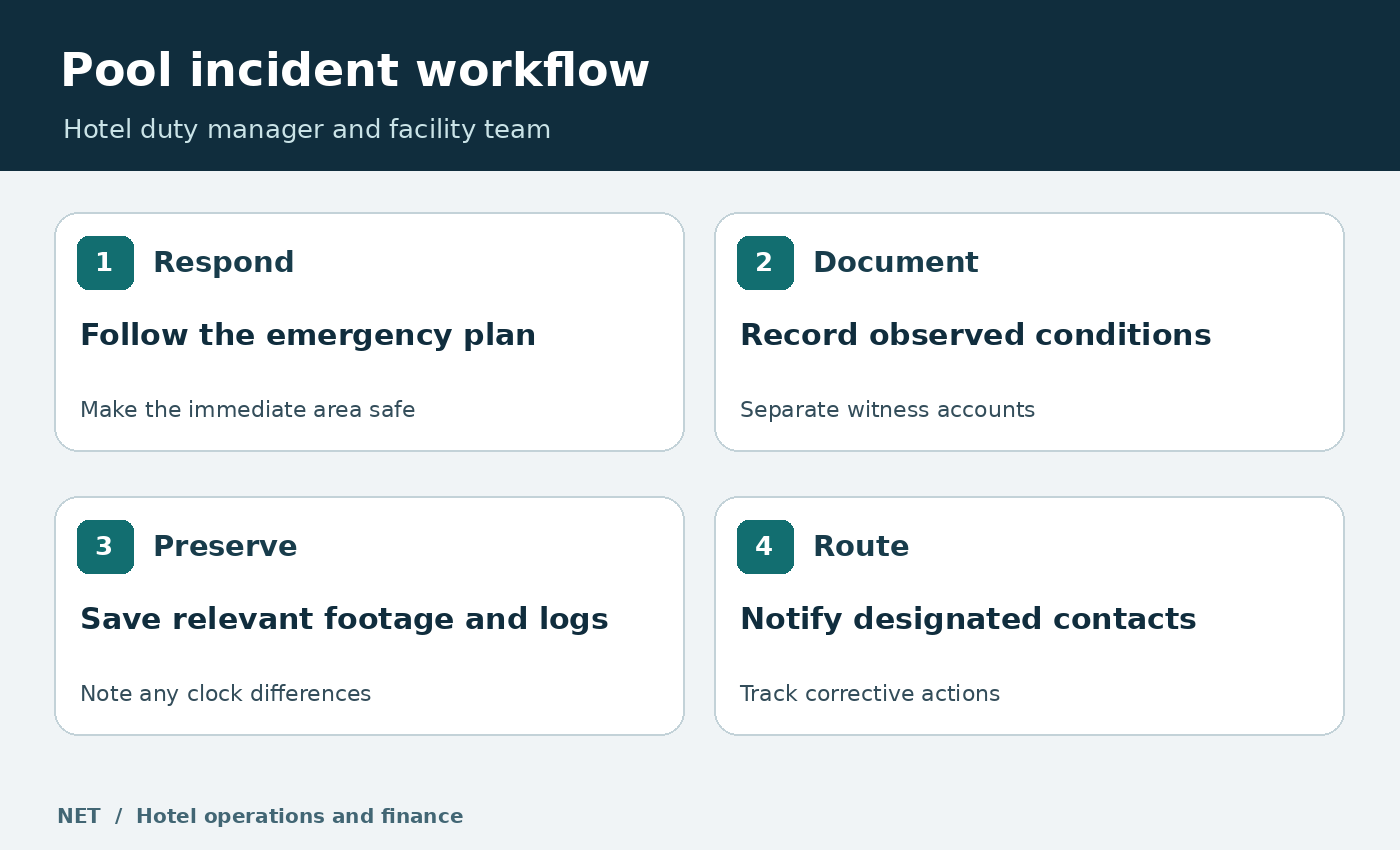
The designated employee follows the hotel’s emergency plan, summons emergency assistance when needed, secures the area as appropriate and makes sure an unsafe space is not reopened prematurely. A second person collects factual information after immediate needs are addressed. Record the time staff first received the report, the time they arrived, the observable conditions and the steps they took. If the incident straddles shifts, note the handoff and which employee retained custody of the incident file. Do not ask a front-desk employee to interpret medical outcomes or assign legal fault.
Use a concise factual template. Include the date and local time, the specific deck location, names and contact information of witnesses when appropriate, who made each observation and how records were obtained. Separate what staff saw from what the guest or another person reported. If a manager notices water after entering the area, write that with the time. Avoid silently changing it to an assertion that the deck was wet at the time of the fall. Keep any later correction as a dated addendum. For a serious event, discuss retention and handling requirements with the hotel’s insurer and counsel.
Preserve the pool records that match the timing
Gather the facility’s inspection logs, contractor tickets, staff schedule, cleaning records, incident notes and any relevant camera segments. Mark each file with its source and time basis. Cameras can be wrong by several minutes, especially after daylight saving changes or a system reset. Record documented offsets without altering the original media. Preserve only relevant records under controlled access. Provide images or records to the insurer, counsel or authorities using the hotel’s approved process. Avoid circulating guest details in general messaging apps or sending photos through personal devices.
The CDC Model Aquatic Health Code offers model language for aquatic facility operations and documentation. Local authorities can adopt or adapt model provisions, and requirements differ by jurisdiction and facility type. Compare the facility’s procedure with the rules and permit conditions that actually apply. A chemical log helps tell one part of an event timeline. A deck inspection, repair ticket or door access log may be more relevant to a particular fall. A report to the local authority, a notice to the insurance carrier and an internal incident report solve different needs; verify which ones apply and who is responsible for completing each.
Work through a realistic late-shift example
A guest reports a slip near the pool gate at 8:22 p.m. The shift supervisor arrives at 8:25, moves other patrons away from the area and checks the immediate response plan. An engineer notes a loose mat edge at 8:36, makes the area safe and writes a work order. The cleaning vendor’s last visit ended at 7:50. A camera shows foot traffic toward the gate and the location is outside its view. The file should preserve each fact and its limitations. A manager can state when the mat was observed to be loose without presenting it as an explanation for the incident.
Read the policy notice provision and the internal escalation steps during a rehearsal. Who makes the first carrier report after hours? How does a manager notify the operator if the owner holds the policy? If the guest emails a request for payment and the notice lands in the sales inbox, how will it become part of the claim file? Record all contacts with date, time, recipient and file reference. Ask the broker what the claim intake process requires and discuss routing any formal notice promptly with counsel. Do not promise coverage or speculate about outcomes when acknowledging receipt of a guest report.
Turn repeat incidents into operational review
Log location and time using consistent categories so patterns can be examined. Track objective indicators such as loose mats, worn surfaces, gates that do not close as designed, missing signage and incomplete inspection logs. Group them by operating shift and vendor responsibility. A pattern of multiple guest reports near a particular drain may warrant an operational review even if the observations differ. Have the facility team examine the area and document any follow-up. Avoid drawing conclusions from anecdote alone. Include completed actions in the renewal narrative and describe any open work accurately.
Set reasonable review points that follow the way the pool operates. A hotel with a seasonal venue might review after opening and after major maintenance. A property with year-round operations may review at predictable intervals and when it adds amenities or changes maintenance providers. Confirm who holds required qualifications and which records are required locally. Run a short tabletop exercise with the manager on duty, front desk and engineering. The exercise should show whether they can locate the relevant documents without sharing guest details with employees who do not need them.
Use contract and ownership details to route the file
Build a contact sheet with the policyholder, owner representative, management company, insurer claims contact, broker and vendors. Include which relevant contracts the file owner should request and where to locate them. A building owner and a hotel operator may have distinct relationships with the same vendor; verify naming matters before a claim. Have the broker reconcile the scheduled locations and any applicable coverage limitations with the actual operating entities. Record renewal decisions and obtain written confirmation when the broker identifies a special condition or exclusion that affects the amenity.
For an outsourced lifeguard or pool maintenance contract, document exactly which duties remain with hotel staff. If the contractor inspects each morning and the hotel team checks the area at night, the duty schedule should have no unassigned changeover. Record who receives a maintenance ticket and who approves reopening after a documented correction. Share operational information via the restricted claim process after an event. If a vendor forwards a claim directly to the hotel, keep the original notice and route it to relevant parties with a durable receipt record. Legal advisers can help interpret any disputed responsibilities.
Assign the first-hour steps and the next-day handoff
Give the duty manager a one-page call order with an after-hours number for each applicable contact and a backup when the first person does not answer. Keep the emergency plan separate and available to everyone on shift. The incident file owner should know how to preserve records that expire quickly, which employee can access pool camera footage and which deadline is measured from the guest report. Have a supervisor review the timestamps while they are fresh. A notification transmitted through an internal system should have a reference number or another confirmation that the recipient received it.
For a daytime event, establish who records inspection observations if the manager is helping the guest. For an evening event, test whether the night auditor has authority to close the area and whom to contact to reopen it. Use a training example in which the contractor has a separate clock and the video storage system overwrites footage. Assign one employee to retain the correct time window using the current local procedure. If the duty supervisor brings an employee’s text account into the file, record the original sender and date and transfer it to the approved storage location instead of editing the original note.
The next-day reviewer should check whether the report distinguishes the guest’s account, observations by staff and any corrective action performed afterward. A useful review records what supporting items are still pending. If a vendor says it inspected the pool but has not supplied a dated record, label it as an unverified report until documentation arrives. If another guest describes a prior related problem, document the circumstances and route it appropriately rather than retroactively modifying inspection logs. The goal is continuity between shifts, not preparation of an argument about who is at fault.
Once immediate hazards have been addressed, add a follow-up task with a named owner and a date for checking whether the corrective action was completed. Verify that the operational team can find the repair order, the required inspections, the updated procedures and any dated notice. A closed maintenance ticket is useful only if it describes the remedy and the person who authorized reopening. At the next team meeting, use a de-identified summary to teach reporting and handoff. Keep the claim file itself available only to staff and advisers who need the details.
Keep the renewal packet small enough to use
Give the broker the amenity profile, operating protocol, dated improvements and relevant incident trends. Ask for a scenario response under the current and proposed liability forms, including applicable terms that could vary between proposals. Continue to budget for safety, maintenance and training regardless of policy limits. Start the broader terminology review with hotel liability insurance, compare forms and proposals using hotel business insurance quotes, and review hotel property insurance for first-party property damage questions involving the same location. A guest claim and an equipment repair can arise from one event and still require different records and different policy reviews.