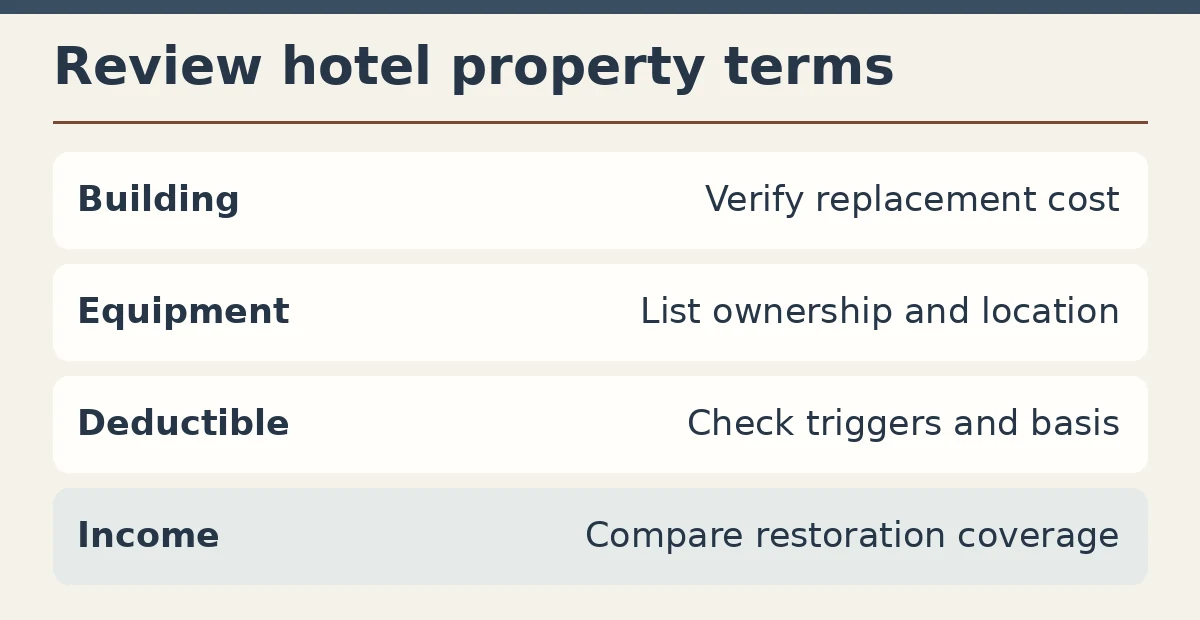
Hotel property insurance starts with a physical inventory and a restoration plan. A hotel can insure its buildings, furniture, equipment, and improvements under different schedules and valuation terms. After a covered loss, the insurer may evaluate how the damage happened before it decides which amount can be paid. Compare the property schedule, cost basis, deductibles, and business income coverage on one realistic repair example before selecting a quote.
Break down what actually needs replacement
Create a building schedule with construction type, year, renovations, gross area, room count, mechanical services, and occupancy by building or wing. Include detached facilities and outdoor features if relevant. List furnishings, kitchen or laundry equipment, fixtures, and stock separately. Tell the broker which property belongs to the hotel, its landlord, a restaurant tenant, or a vendor. If you lease equipment or rooms, obtain the agreement and identify who is responsible for insuring the property.
A hotel that converted two meeting rooms to guest suites may have an older diagram showing the original layout. Submit the current description and the changes that affect restoration. Where evidence is available, keep current construction estimates and inventory records. Compare the resulting insured amount across carriers. A dollar value is useful only when you can match it to the insured structure, owned contents, and the valuation terms the coverage uses.
Read replacement cost and actual cash value on the form
Ask each broker to explain how a covered repair to the building would be valued, and how equipment or furnishings would be handled. Replacement cost and actual cash value can produce different results. Conditions for replacement benefits, time to complete work, and special limits vary by policy. A carrier might apply another settlement rule to a roof or particular equipment. Request the actual form and an illustration based on one incident at your location.
A contractor’s price to return a guest room to use may include removal, new wall finishes, fixture replacement, and work behind the walls. Ask which components the insurer would consider and how it would address applicable building-code requirements. If code upgrades or demolition have a separate limit, include it in the review. Verify whether construction costs are based on the expected scope and local labor market. Compare the premium against the coverage you would want through a lengthy restoration.
Map the causes of loss before comparing price
Give the carrier practical events in separate rows. Consider fire in the laundry area, wind damage to a roof, a water leak from inside the building, and water entering from outside. Ask which forms apply to each event and how wind, flood, earthquake, equipment breakdown, or sewer backup would be treated based on the site and contract. Where a separate policy or endorsement is available, get a distinct quote and write down its insured amount and deductible alongside the main policy.
If a loss involves two causes, ask how the carrier would evaluate them, what evidence it would request, and how the coverages would be coordinated. Record the outcome as a quote comparison, since actual payment depends on the event and contract in effect. Set aside room for review of vacancy, renovation, protective safeguards, and incidental operations. A lodge may change how it uses part of a building between summer events and winter repairs.
Convert percentage deductibles into dollars
If a quote shows a percentage deductible, ask which value is used as the base. It may apply to a particular location or value defined in the contract. Find out which event triggers the provision and how the carrier applies it to a multi-building claim. Enter all the deductible amounts in dollars on the quote sheet. Verify whether a flat deductible and a percentage deductible can both be relevant to different portions or causes of a loss.
At a hypothetical property, if a 2% deductible applies to a $5 million scheduled value under its form, it equals $100,000. An applicable flat $25,000 deductible would leave a different cash requirement. Put the premium difference next to that result. Ask the insurer how it would treat another building and any interruption loss from the same event. Use a second, smaller loss example to see how frequently the hotel might need to use its own reserve.
Check forms for limits and underinsurance provisions
A quoted blanket limit and a schedule of individual location limits represent different structures. Ask which approach applies to your proposal and whether any statement of values or margin provision changes what the carrier would pay at a single location. Read any coinsurance or agreed value terms the broker describes. Request an example of a covered partial loss if the building’s replacement estimate turns out higher than the amount used for the quote.
If the hotel covers several buildings or neighboring sites on the same policy, ask what happens when one storm damages more than one at a time. List the priority repairs and the lender’s requirements for each location. A shared amount may be affected by losses elsewhere. Keep values current after new equipment arrives. Request written confirmation when a building addition or renovated space is added to the coverage schedule.
Include time and expense in your recovery estimate
Ask for the business income form and explain how many rooms could remain open if one part of the hotel were damaged. Check the restoration period and any extended period when demand could remain below normal. Ask which extra expenses might qualify, such as temporary equipment or a substitute operating location, and what approvals are needed. Verify the waiting period and how the carrier treats a loss that affects the property during peak travel season.
As part of your calculation, request recent room revenue reports, payroll, utility bills, and meeting revenue by month. Compare the same expected closure duration for each proposal. Ask the insurer which continuing expenses and revenue it uses. A worksheet can help the hotel decide what limits to compare while preserving the difference between forecasted revenue and a payable claim amount.
Inventory records before anyone needs to file a claim
Keep photos of the property, invoice records, equipment identifiers, floor diagrams, and financial statements. Use secure storage that the management team can reach if the property is inaccessible. Assign responsibility for notice to the lender, landlord, insurer, and remediation company. Train managers to preserve relevant records and obtain a written record of repairs where safe. The policy may specify what must be documented promptly and which expenses need authorization.
When the policy arrives, check the building values, forms, business income terms, deductibles, and mortgagee details. File the insurer’s decision on any proposed changes in the same place. Review the schedule again after renovation or purchase of new equipment. Insurance is easier to compare when you know which buildings and costs the company expects to evaluate, as well as the cash you must provide first.
Walk the property with a person who knows the building
Ask maintenance for records that might not appear in the value schedule. An aging rooftop system may have been replaced in one wing but not another, and two pieces of similar equipment may serve different areas. Record serial numbers and location, get a reliable idea of replacement price, and ask how the form treats internal breakdown or other physical damage. The answer can depend on cause as well as the listed item. Include custom fixtures whose matching materials might be difficult to obtain.
Review areas where vendors or tenants use their own inventory. A hotel restaurant tenant may own its equipment while the building owner insures the structure and certain installed improvements. Use the lease to identify responsibilities and get written descriptions from each broker. Clarify who handles structural repairs if the tenant’s property is also damaged. List emergency contacts and identify which insurer needs access to the old records after a loss.
Compare coverage for a closed wing on the actual dates
Suppose the hotel takes 18 rooms offline for a scheduled refresh. Ask the insurer how current coverage applies during that work and what changes if guests no longer occupy an entire wing. If the material is delivered before installation, identify where it is stored and whose policy could address it. Share the contractor’s dates and ask what happens if the work extends past the original timeline. Get any insurer conditions in writing before assuming ordinary hotel coverage applies unchanged.
When you get a second proposal, correct any differences in dates and room usage before comparing premiums. Make sure the lender receives its requested insurance evidence for the relevant period. After the work ends, update the statement of values and document when rooms returned to service. Insurance for a renovation can involve its own terms, and downtime following a covered loss is a distinct issue from scheduled days offline.
Check whether restoration depends on property away from the hotel
Discuss suppliers, a separate storage facility, and adjoining premises that the hotel depends on. A loss at another location can affect reservations or essential events even when the hotel building is undamaged. Ask whether the policy offers any applicable protection and what conditions, locations, or hazards it identifies. A separate statement or endorsement may be needed. Compare how each carrier describes the relevant expense and any limits.
Check coverage for equipment away from the insured premises if the hotel moves it for repairs or events. A property limit tied to the main address may not explain how such an item is evaluated. Save the inventory and agreements identifying its location and owner. Ask the broker to mark the applicable contract for each example. When you compare quotes under a tight closing deadline, that written record shows which details must be resolved before binding the property program.
Review equipment still at work after part of the building closes
Suppose a fire closes the laundry while the guest rooms remain usable. Ask which equipment records the insurer needs, whether the replacement valuation is documented, and how it would evaluate the cost of sending laundry out temporarily. Note the difference between a business income loss and an extra expense used to reduce a wider interruption. Ask the broker to show the actual coverage form and applicable maximums. Create a second example in which only leased equipment is damaged so the roles of its owner and operator are visible.
If old equipment produces a much higher repair or replacement quote than the value used at renewal, correct the schedule and record how the appraisal was prepared. Compare the new insured amount with the policy’s limits and any deductible or valuation changes. Discuss how a required replacement could affect lead times. Keep the temporary operating expense next to the estimate so a facility manager can explain why an extended closure could cost more than the broken equipment.
Keep an independent value and deductible review each year
Have facilities and finance sign off on the current list before the quote goes out. Check it against renovation invoices and inventory records. Identify property sold or removed, and look for changes to construction, use, supplier locations, and tenants. A second hotel can have a distinctive risk even if management has entered both on a single application. Ask the carrier to confirm the information it used and when the corrected proposal takes effect.
Ask how the insurer would apply location sublimits and event-specific deductibles during one loss affecting more than one building. Compare the written answers and check the selected figures in the issued documents. Set a reminder to reconsider capital spending and income needs midterm. When a broker calls about renewal, the operating team should be able to produce one shared, dated record instead of rebuilding values from old documents.
Connect this comparison to the rest of the hotel
Building values and proof often matter to a lender. Keep the schedule of insured property separate from the owner’s financing assumptions, then compare how each form would handle a repair that interrupts operations.
For related decisions, use the hotel business insurance quote guide, the hotel insurance resources, and the hotel financing resources.
Sources consulted
Insurance Information Institute — Understanding commercial package policies