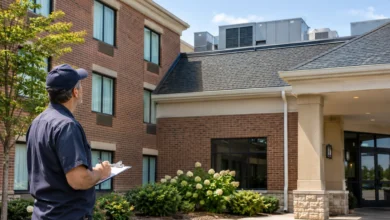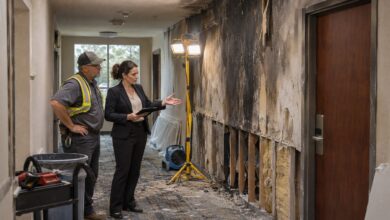
A guest falls outside a 68-room hotel on the same morning that a burst supply line closes eight rooms. The guest injury, the damaged drywall, and the loss of room revenue can raise three different coverage questions. A hotel business insurance quote becomes useful when it identifies how the insurer would evaluate each one, whose name belongs on the policy, and what the operator would still need to fund. Start with the way the hotel actually operates and compare the policy forms alongside the premium.
Describe the operating business and its buildings
Give each broker a schedule showing each location, number of rooms, ownership entity, manager, mortgage lender, and property values. Walk through what happens beyond room sales. List food service, alcohol, meeting rooms, shuttle use, a gym, a pool, and space leased to outside operators. If a separate company owns the building and another hires staff, ask how each company appears on the applicable policies. Include the names that appear in contracts, and verify later that the declarations reflect the same parties.
A lender, franchise, or management company may specify insurance terms in an agreement. Put those requirements in a second column next to the operation’s own coverage needs. Determine which documents identify a lender’s interest and which establish coverage for a named business or additional insured, if applicable. Ask for copies of relevant endorsements. A certificate is useful for identifying a policy and term, while the actual contract and endorsements determine what coverage applies. Ask the broker to flag any gap between a contractual request and what the proposal can supply.
Build a coverage inventory by type of loss
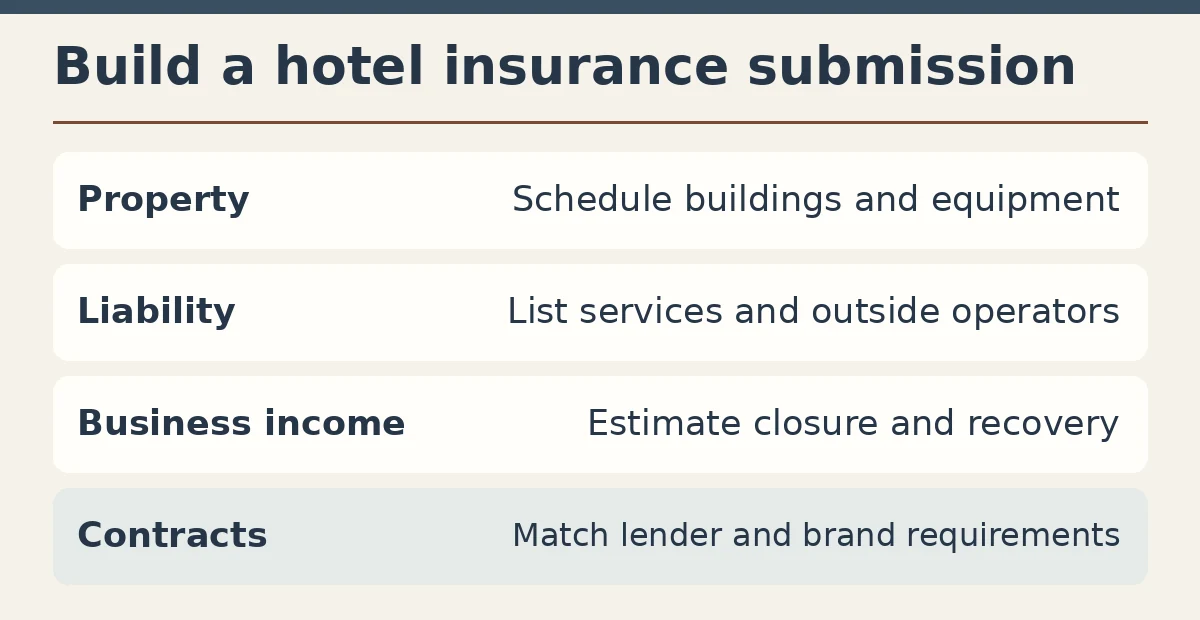
Start with property. A commercial property policy can cover certain physical damage to scheduled buildings and business property, subject to its causes of loss, valuation, exclusions, and deductibles. Document furniture, fixtures, equipment, improvements, and inventory with location and ownership. If rooms are out of service while eligible repairs are made, ask how the business income form would respond and whether it includes extra expenses. Identify dependent operations or interruption scenarios you care about and request the actual forms.
Next, evaluate liability for claims by guests or other third parties. A general liability proposal can address specified bodily injury and property damage claims, subject to the form. Ask about separately rated or excluded activities like alcohol service, vehicle transport, events, or contractor operations. Workers’ compensation, commercial auto, cyber, and umbrella or excess liability can involve separate policies. Check rules for the state and operation with a licensed professional. Itemize the full program so a low price on the package does not hide a large separate expense.
Compare hotel business insurance quotes using the same loss stories
Ask each broker to address four written examples. Use a covered fire that affects some rooms, a guest injury during a private event, a storm that forces a temporary interruption, and a privacy incident involving a guest record. Ask what triggers an evaluation, which contract is relevant, which exclusions or sublimits matter, and what documentation would be requested. These are tests of the proposal. Coverage decisions depend on the facts and the issued policy on the loss date.
Write the total annual premium, fees, and separate policies beside each example. Include property deductibles in dollars and ask about the liability deductible or self-insured retention if one applies. When a quote has a higher retention, calculate the cost of one hypothetical claim at that level. If the premium is $3,000 lower and the property deductible is $10,000 higher, set aside time to decide how you would fund the difference. Insurance comparison is partly a cash flow decision.
Estimate business income from the rooms you cannot sell
Choose a month, identify normal occupancy and room rates, and document operating expenses expected to continue. Record food, parking, or event revenue where relevant. Estimate repairs and reopening time with a contractor. Ask the insurer how the form treats the period of restoration, waiting periods, partial reopening, and costs to relocate guests or rent substitute space. Save the worksheet assumptions along with the supporting financial statements.
For illustration, eight unavailable rooms over 21 nights, at 70% expected occupancy and a $140 average nightly rate, produce $16,464 in estimated foregone room revenue. That figure ignores expenses, customer relocation costs, and other policy terms. Ask the broker how its form considers continuing expenses, saved expenses, and time limits. If the hotel can shift guests to available rooms without losing all of the revenue, record the expected difference. A quote should help the operator identify which expenses actually need protection.
Track changes that affect hotel renewals
Notify your broker about a renovation, temporarily closed wing, new alcohol service, shuttle agreement, or change in management as the contracts require. Find out whose responsibility it is to notify the property and liability carriers. Keep current room counts, replacement cost estimates, contractor agreements, training records, and prior claims information in a shared working file. Make sure those records can be found quickly by the hotel team responsible for an insurer’s request.
Review the quote before a renovation starts. Discuss where materials will be stored and whether hotel guests still use the building. Ask which insurer evaluates damage to the project and whether operational coverage changes when rooms close. At the next renewal, compare any lower price with the list of operations actually included. If the broker has assumed a discontinued service is still offered, correct the file and determine whether the underwriter needs a fresh estimate.
Make sure the program works after issuance
Once you choose a quote, verify who is insured, insured locations, property values, policy dates, limits, deductibles, and any contractual endorsements. Confirm who will respond to an incident during a shift, which phone or portal starts a claim, and what supporting records the insurer expects. Separate insurer contact information from instructions about protecting guests and preventing further damage. During an incident, staff should follow their established safety and reporting procedures.
Keep a calendar with the next renewal, insurance certificate deadlines, and any insurer inspection or documentation request. If something changes after coverage begins, ask which endorsement records the change and its effective date. Review invoices against the accepted written proposal. The best quote for your hotel is the program you can explain by location, policy, claim example, and annual budget, with enough documentation for another manager to check the same terms.
Size the policy around a renovation or change in management
If you are taking over from another operator, ask for a list of policies that will end at closing and the notices needed on open matters. A claim reported after the transfer can concern an event that took place during the previous ownership. Ask the parties and their brokers to identify the relevant dates, insurers, and records the hotel is entitled to retain. A change in management can also affect contract requirements and the stated insured entities. Compare the insurer’s proposed dates with the date staff or guest reservations are handed over.
For renovation work, create a list showing how inventory changes by week. If a floor is taken out of service, record the number of rooms, who has access, and the work happening in guest or public areas. Review what the hotel’s current forms require for a change in occupancy. Obtain a separate written answer about construction coverage and stored material. Keeping the construction schedule beside the insurance dates lets the manager check whether a delay affects both the insurance program and cash.
Review premium and retained costs on one budget
Ask the broker to itemize property, general liability, income, workers’ compensation, cyber, auto, and any separate specialty policy that the operation uses. Ask which premiums are estimates or might be adjusted based on payroll, revenue, or another measure after the term. Discuss a higher and lower deductible on the same property coverage. Add amounts that must be paid immediately to the cash plan. A financed premium can also change the payment schedule, so compare the full annual cost and the timing.
Consider a hypothetical hotel whose two accepted proposals have a $44,000 and a $49,000 total cost. The lower quote adds a $20,000 water deductible and removes a stated property endorsement. Before selecting it, quantify the new water exposure and ask what the missing endorsement would cost. If an insurer offers a separate service, identify how it actually applies. Record the cost of separate fixes alongside the insurance bill. A stated savings amount is meaningful only after all relevant expenses appear on the same comparison.
Rehearse two handoffs before the first renewal
Start with a manager who discovers a closed guest floor is affected by a leak. The manager confirms immediate safety measures, collects a dated notice, and identifies the property and business income contacts. Have finance find recent occupancy and revenue reports by date. Ask the broker which information will aid a claim evaluation, including room moves, partial reopening, and completed repair work. Store the guidance in an accessible internal record.
For a second drill, ask staff what to do after a guest injury at a rented event. Find the event agreement, room schedule, and internal contact in one place. Ask who can report a claim on behalf of the hotel and confirm that people know how to share information appropriately. Use the exercise to uncover gaps in issued documents or on-call coverage. At the next renewal, save both examples and compare each proposed program using the same facts.
Compare the quote with contracts the hotel already has
Gather the provisions that ask for insurance in the mortgage, management agreement, lease, and franchise documents, if applicable. Put the legal name and role of each counterparty alongside the requirement. Ask the broker which proposal meets each requirement and whether a missing item is available as an endorsement. Then have the appropriate adviser review the contract itself. A timely answer on proof can matter when a lender needs evidence for a closing.
The owner and operator can have different responsibilities. Imagine that a separate company manages the hotel and signs vendor agreements in the operating entity’s name. Find out which policies recognize the owner, manager, and employer, and which party is expected to secure coverage. Ask who maintains the property schedule and shares it at renewal. Clarify the status of furniture and equipment supplied under a lease. These details can determine whether two policies with similar names belong in the same comparison.
Track the claims and service terms along with the annual premium
Read the policy’s notice and documentation instructions, and ask whether staff contact the broker or report directly to a carrier. Keep one reference for which program covers which property and type of incident. Ask the carrier how it handles questions about an updated estimate or a disputed expense. Note the time available to report changes, especially where several policies could be relevant to one event. Confirm those dates and responsibilities after changes in staff.
Use the same property facts for the next renewal and date any updates. Compare the price change, insured values, and policy changes on separate lines. If an insurer adds a written requirement affecting building maintenance, ask the facilities team to verify responsibility and timing. That practice can expose a more important difference than a small premium change. A well-organized update also helps an owner budget for reserves and coverage before signing a new lease or financing agreement.
Connect this comparison to the rest of the hotel
A hotel expansion can affect building values, collateral requirements, and the systems an operator uses to prove income or incidents. Keep the coverage terms in the quote file and let the business teams review the connected decisions from a common property description.
For related decisions, use the hotel insurance guides, the hotel financing guides, and the hotel operations software guides.
Sources consulted
Insurance Information Institute — Understanding commercial package policies